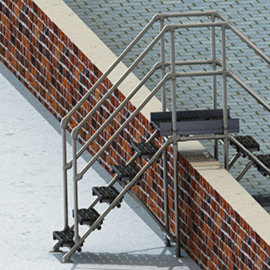
Working at Height Equipment and Kee Step Platforms FAQs
1. What qualifies as working at height equipment?
Working at height equipment includes tools and systems designed to protect workers from falls when they are working above ground level. This includes fall arrest systems, safety harnesses, mobile elevated work platforms, and stepovers such as Kee Step platforms, which offer safe passage over rooftop obstacles.
2. How do Kee Step platforms support the use of fall protection equipment?
Kee Step platforms reduce the need for constant reliance on personal protective equipment by offering collective protection. However, where applicable, equipment like fall arrest blocks, full body harnesses, and anchor points can be used in conjunction with these platforms for maximum worker safety.
3. What role does a risk assessment play in selecting the right height safety equipment?
Risk assessments are essential to identify the most suitable working at height equipment for the task. For example, if workers are operating near fragile surfaces or where a fall to a lower level is possible, a combination of fall arrest systems and Kee Step platforms may be required.
4. Are Kee Step platforms suitable for the construction industry?
Yes. The construction industry often involves navigating rooftop equipment, ducting, or confined spaces, making Kee Step platforms an ideal part of a broader fall protection strategy. These platforms help minimise hazards and support compliance with safety regulations.
5. Can stepovers replace safety harnesses and other fall arrest equipment?
Not entirely. While Kee Step platforms provide collective protection and reduce fall risks, fall restraint and arrest equipment such as self-retracting lifelines or shock-absorbing lanyards may still be necessary depending on the site’s conditions and the task involved.
6. What is the benefit of integrating Kee Step with other access equipment?
Combining Kee Step platforms with access equipment like scaffolding or ladders enhances worker safety by providing a continuous, reliable path across elevated areas. This layered approach ensures a safer working environment and helps prevent falls.
8 Ways Kee Step Platforms Enhance Working at Height Safety
- Reduce Reliance on PPE
By offering collective protection, Kee Step platforms reduce the need for full-time use of personal protective equipment like safety harnesses and lanyards.
- Minimise the Risk of Personal Injury
These platforms help prevent falls by providing a stable walking surface across rooftop hazards, reducing the likelihood of incidents that could cause serious injuries.
- Support Compliance with Safety Regulations
Kee Step platforms are fully compliant with EN 14122-3 and EN 516 Class 1-C, aligning with height regulations and employer responsibilities.
- Provide Safe Access Over Rooftop Obstacles
Ideal for navigating around air conditioning units, pipework or fragile areas, Kee Step ensures safe working practices even in high-risk zones.
- Integrate Seamlessly with Fall Arrest Systems
Kee Step can be used alongside anchor points, fall arrest equipment, or rescue plans to offer a complete fall protection solution.
- Adapt to a Broad Range of Roof Types
Whether you’re working on asphalt, PVC membrane or concrete, Kee Step platforms suit a wide variety of roof surfaces and environments.
- Eliminate the Need for Roof Penetration
With no need to drill into the roof membrane, Kee Step platforms preserve structural integrity while maintaining a safe working area.
- Ensure Efficient Access and Maximum Safety
Designed to suit a range of rooftop access challenges, Kee Step platforms provide a durable, galvanised solution that helps protect workers on every job.